
ASOCIACIÓN DE FACIES: LA CLAVE PARA LA IDENTIFICACIÓN DE LA FORMACIÓN HOLLÍN EN LA REGIÓN SUR ORIENTAL DEL ECUADOR
Barra lateral del artículo
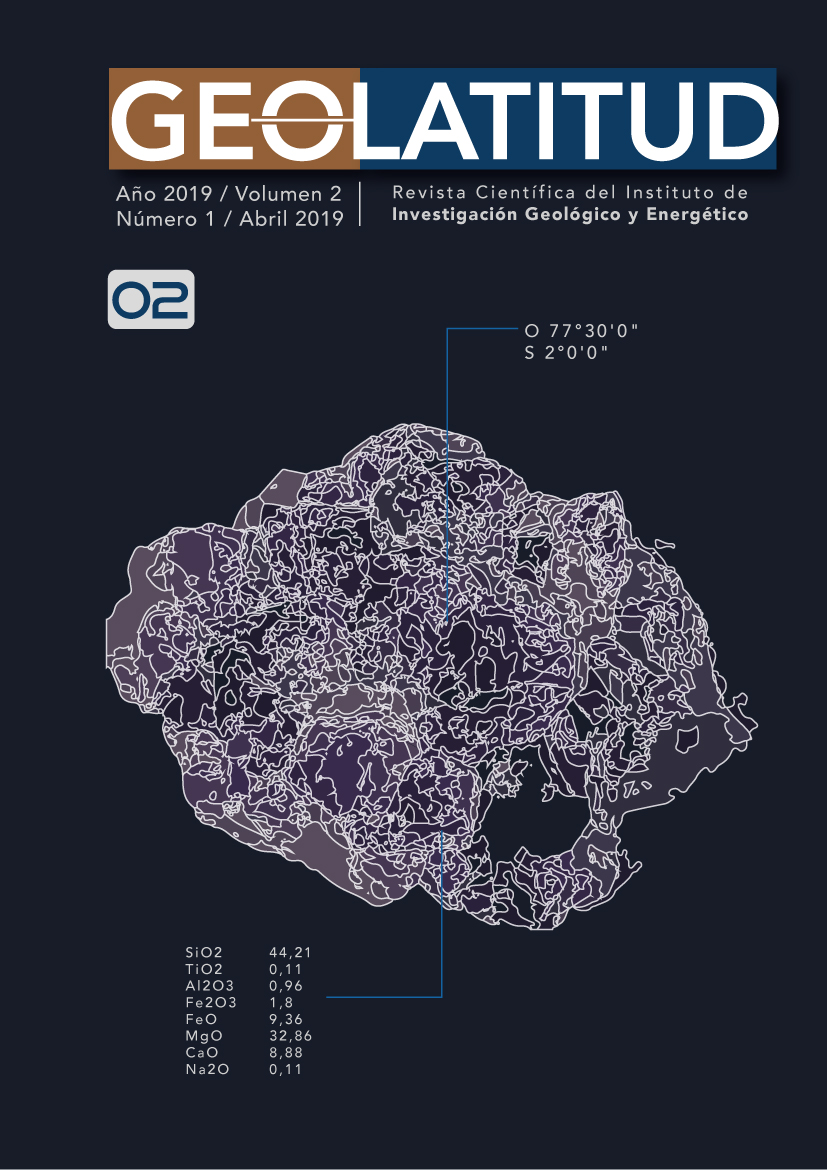
Contenido principal del artículo
Resumen
La investigación presenta características estratigráficas y sedimentológicas de la Formación Hollín (Aptiano - Albiano), en la región sur oriental del Ecuador. La Formación Hollín estratigráficamente se ubica en la base de la secuencia sedimentaria cretácica de la Cuenca Oriente y se desarrolla en inconformidad angular sobre un basamento deformado y de litología heterogénea (pre-Aptiano). El registro sedimentario de la transición de ambientes fluviales a ambientes marinos someros con influencia mareal (parte de la transgresión que ocurrió en la margen noroccidental sudamericana en el Cretácico Superior) es observado en la secuencia vertical de la Formación Hollín, por esta razón la Formación Hollín ha sido dividida en dos miembros: 1) cinco facies arenosas y una facie lodosa han sido reconocidas en el Miembro Inferior, que contiene facies fluviales de ríos trenzados de sinuosidad media a baja. Mientras que 2) el Miembro Superior es caracterizado por el desarrollo de planicies de mareas, que incluyen pantanos en zonas supramareales; planicies de lodo y planicies mixtas en zonas intermareales; y con el desarrollo de barras y dunas mareales en zonas submareales. El límite con la suprayacente Formación Napo corresponde a una zona de transición caracterizada por la presencia de glauconita.
##plugins.themes.bootstrap3.displayStats.downloads##
Detalles del artículo
Sección
Esta obra está bajo la lincencia Internacional Creative Commons CC BY 4.0

Biografía del autor/a
Christian Wladimir Romero, IIGE
Nació en Quito, Ecuador en 1992. Recibió su título de Ingeniero en Geología de la Escuela ¨Politécnica Nacional en 2018; Ha participado como expositor en las VII Jornadas de Ciencias de la Tierra, EPN en 2017 y como expositor en el Student Chapter AAPG-EPN en 2018. Sus campos de investigación están relacionados con la Sedimentología y Estratigrafía aplicada a la Geología Regional y Reconstrucciones paleo ambientales. Actualmente se desempeña como Geólogo en el Instituto de Investigación Geológico y Energético.
_10.56_.31_.png)
Ana Belen Gramal, IIGE
Nació en Quito, Ecuador en 1990. Recibió su título de Ingeniera en Geología de la Universidad Central del Ecuador en 2017. Ha participado en elaboración del proyecto “Redefinición y Caracterización de la unidad hidrogeológica Ibarra y la unidad hidrogeológica Machala” en el Instituto Nacional de Hidrología y Meteorología (INAMHI) en el año 2016. Adicionalmente, participó en el levantamiento de información de prospección geoquímica (sedimentos fluviales) en la hoja topográfica Alamor escala 1: 50 000, desarrollado por el Instituto Nacional de Investigación, Geológico, Minero, Metalúrgico actual (IIGE). Actualmente se desempeña como Geóloga en el Instituto de Investigación Geológico y Energético (IIGE). En esta investigación participo como especialista en geologia regional.
_11.02_.24_.png)
Fausto Rodolfo Carranco, IIGE
Nació en Quito, Ecuador en 1983. Recibió su título de Ingeniero en Geología de la Universidad Central del Ecuador en 2008. Posterior recibió su título de Máster en Procesos y Recursos Geológicos de la Universidad Complutense de Madrid en 2017. Ha participado como geólogo regional en varias empresas privadas y públicas. Se desempeñó como docente en la Facultad de Geología, Minas, Petróleos y Ambiental de la Universidad Central del Ecuador. Coordinador del Proyecto de Zonificación de Susceptibilidad de Amenazas por Procesos de Movimientos en Masa del Territorio Ecuatoriano. Durante su trayectoria profesional se ha especializado en Geología Estructural y Geocronología en circones. En el proyecto de Investigación Geológica y Disponibilidad de los Recursos Minerales en el Territorio Ecuatoriano ha liderado varios grupos de geólogos en la actualización de las hojas geológicas escala 1:100.000. Actualmente, se desempeña como Geólogo con 10 años de experiencia en el Instituto de Investigación Geológico y Energético.
_11.03_.40_.png)
Silvia Daniela Toainga, IIGE
Nació en Quito, Ecuador en 1991. Recibió su título de Ingeniera Geógrafa graduada en la Pontificia Universidad Católica del Ecuador en el 2015, colaboró con su disertación en la realización del libro: "Percepción y adaptabilidad de la población de los Andes ecuatorianos a la variabilidad climática - Análisis comparativo multicultural" de las autoras Svetlana Zavgorodniaya, Anna Costales y Sofía Enriquez. Cuenta con cinco años de experiencia en el diseño de cartografía temática. Actualmente trabaja en el IIGE, donde ha colaborado en la producción del Mapa Geológico del Ecuador, Escala 1:1 000 000 año 2017.
Notice: Deprecated: The template at plugins/themes/bootstrap3/templates/plugins/generic/citationStyleLanguage/citationblock.tpl has moved and will not be found in the future. in /var/www/ojs/lib/pkp/classes/plugins/Plugin.php on line 468